
Behind the Bite
The Science Behind the Bite
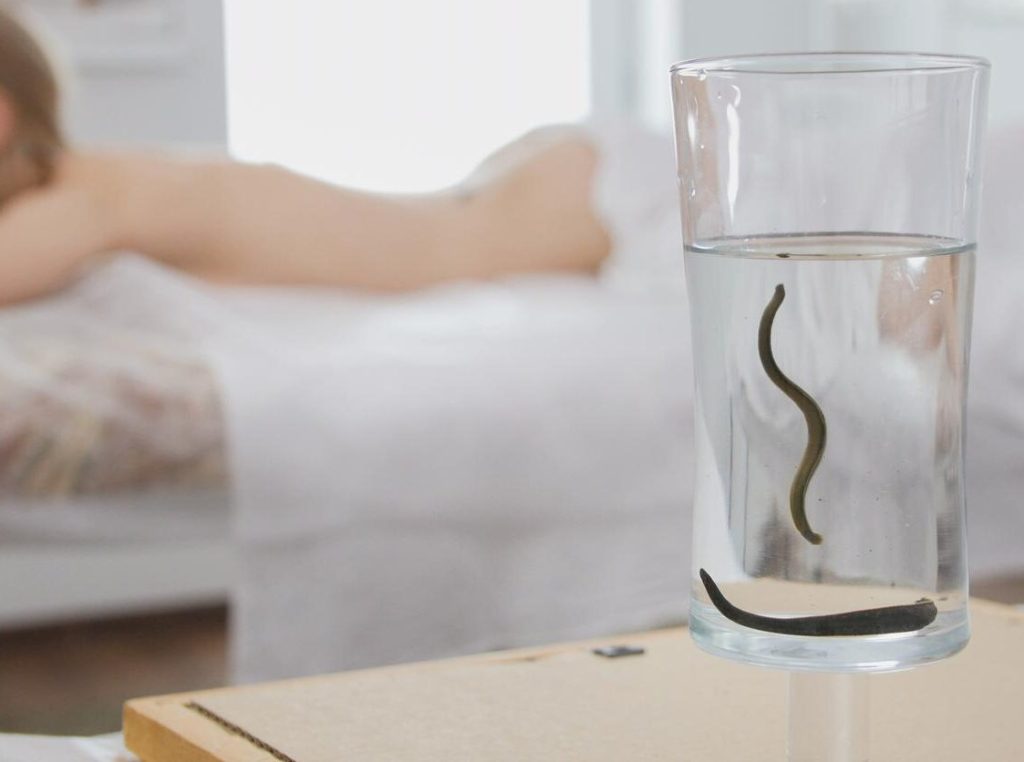
Leeches are segmented worms belonging to the phylum Annelida and the subclass Hirudinea. While there are over 600 species of leeches, only a few are used therapeutically, most notably Hirudo medicinalis, the medicinal leech. When applied to the skin, a leech attaches using its sucker-like mouth and makes a small incision with three jaw-like structures, each lined with tiny teeth. This bite is virtually painless due to the anaesthetic properties in the leech’s saliva.
What follows is a complex biochemical interaction. As the leech feeds on blood, it injects a cocktail of bioactive substances through its saliva, including hirudin, calin and other enzymes. These compounds serve various functions such as thinning the blood, preventing clotting, dilating blood vessels and reducing inflammation. This biochemical arsenal allows the leech to draw blood effectively while providing therapeutic benefits to the host.
Medical Uses
Medical Uses in the Modern Era
Leeches are not merely relics of historical medicine; they have been reintegrated into modern medical practice, particularly in microsurgery and reconstructive procedures. One of their most notable uses is in the reattachment of severed fingers, ears or other appendages. In these cases, veins are often more difficult to reconnect than arteries. Without proper venous drainage, blood can pool, leading to tissue death. Leeches provide a temporary but highly effective solution by draining excess blood and allowing time for new veins to form naturally.
Beyond surgery, leech therapy has been explored for treating conditions such as osteoarthritis, venous congestion, and even certain cardiovascular issues. The anti-inflammatory and anticoagulant properties of leech saliva help reduce pain and improve circulation in joints affected by arthritis. In patients with varicose veins or deep vein thrombosis, leech therapy may be used to relieve pressure and promote better blood flow.
Components of Leech Saliva
The Therapeutic Components of Leech Saliva
Safety
Safety and Regulation
Despite its ancient origins, modern leech therapy is conducted under strict clinical conditions. Medicinal leeches are bred in controlled environments to prevent contamination and ensure sterility. After a single use, leeches are safely disposed of to avoid cross-contamination. Medical professionals are trained in the proper handling and application of leeches, and patients are closely monitored throughout the procedure.
There are, however, contraindications and risks associated with leech therapy. These include allergic reactions, excessive bleeding, or potential infection at the bite site. Therefore, it is essential that the therapy is performed by qualified practitioners who can assess patient suitability and manage any complications.
Public Perception
Public Perception and the Future of Hirudotherapy
Although leech therapy is supported by scientific research and recognised in medical settings, public perception remains mixed. The idea of using a live creature to draw blood can be unsettling for some, yet many patients report surprisingly positive experiences, describing the therapy as painless and even relaxing. Education and exposure play a key role in shifting perceptions and highlighting the clinical value of these organisms.
As biomedical research advances, scientists are investigating ways to synthesise the beneficial compounds found in leech saliva. While this may one day replace the need for live leeches, the natural form continues to offer a cost-effective and biologically harmonious method of treatment in the meantime.
Massage Treatments
Check out our massages
Choose the right massage for you and combine relaxation with therapy for your body and muscles.
If you need help, contact me!
