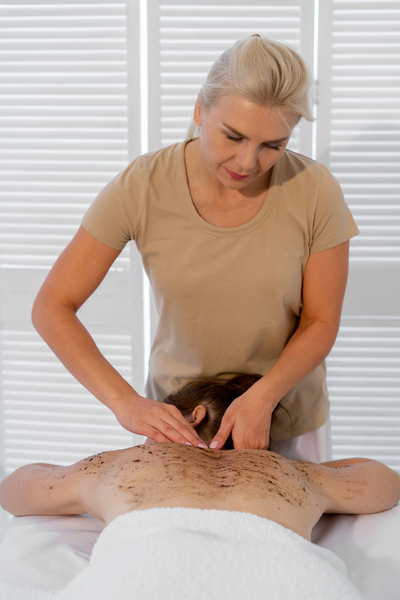
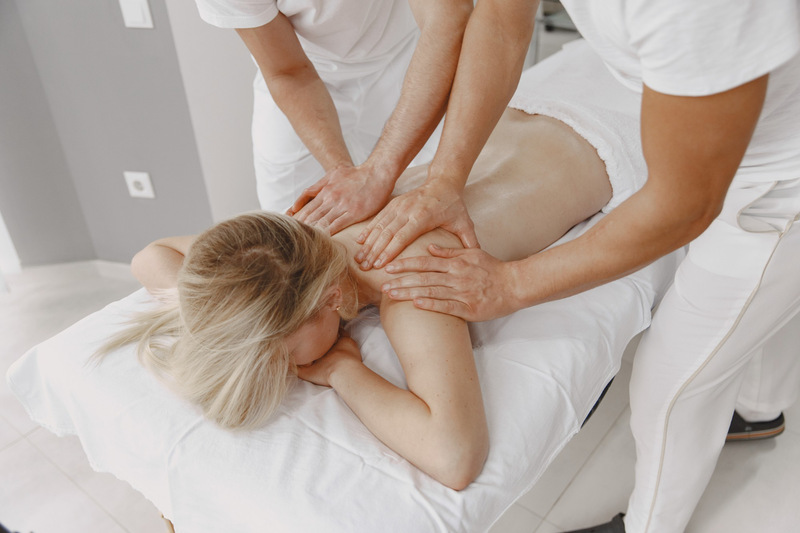
Swedish massage techniques involve various manipulations of muscles and tissues aimed at reducing tension, improving blood circulation, and relaxing the body. Here are descriptions of the individual techniques.
Effleurage technique is often used at the beginning and end of a Swedish massage session. It involves gentle, flowing strokes of the skin with the hands or fingers, moving along the contours of the body. Effleurage aims to warm up the skin, initiate relaxation, and prepare the tissues for deeper massage techniques.
Petrissage is a deeper form of muscle manipulation, involving kneading, lifting, and squeezing soft tissues with the fingers, hands, or edges of the hands. This technique helps loosen tense muscle areas, improve blood circulation, and remove toxins from the tissue.
Friction is an intense technique that involves using pressure and finger movement to deeply press and manipulate soft tissues. This technique can be used to release muscle adhesions, alleviate pain, and improve tissue flexibility.
Tapotement technique involves circular or linear movements of the fingers or hands along muscles and tissues. It is an intense form of massage that can be used to release muscle tension, improve blood circulation, and alleviate inflammation.
Vibration is a gentle, rhythmic shaking applied to the skin using the hands or fingers. This technique can be used to stimulate muscles, improve blood circulation, and relieve muscle tension.
Each of these Swedish massage techniques has specific applications and brings various benefits to the body. When used together, they create a comprehensive massage session that helps relax the body, reduce muscle tension, and improve overall well-being.
Swedish massage, due to its versatility and effectiveness, brings numerous health benefits for both the body and mind. Below are several key health benefits associated with this massage technique.
Swedish massage helps to loosen tense muscles by employing various techniques such as kneading and rubbing. This aids in alleviating muscle tension, which can be caused by stress, sedentary lifestyle, or physical activity.
Manipulations and pressure applied during Swedish massage stimulate blood circulation, thereby accelerating the transportation of oxygen and nutrients to muscle tissues and organs. Improved blood circulation also aids in removing toxins from the body.
Regular Swedish massage sessions can help improve muscle and joint flexibility, leading to an increased range of motion. This is particularly beneficial for individuals suffering from joint stiffness or mobility limitations.
Swedish massage has a strong relaxation effect, helping to reduce stress and tension levels. By stimulating nerve receptors in the skin, massage can trigger endorphins – natural brain chemicals responsible for feelings of relaxation and well-being.
Regular Swedish massage sessions can benefit mental health by reducing symptoms of depression, anxiety, and insomnia. Focusing on body and mind relaxation during massage can help improve overall mental and emotional well-being.
Swedish massage is more than just a luxurious pleasure – it is a form of therapy that can bring many health benefits. From muscle relaxation to improved blood circulation, its impact goes deeper than just surface-level relaxation. With careful preparation before the massage, each session can be even more effective, helping you to enjoy the full benefits of this ancient art of body care.